
Built With Clinics, Not Just For Them: How TrichoLAB's Hair Restoration Software Gets Made
TrichoLAB · Product philosophy
How doctor feedback shapes every feature we build - and why that changes what hair restoration software can actually do.
Most technology companies build a product, then ask doctors what they think of it. We did it the other way around.
When clinics ask us what makes TrichoLAB different, the honest answer isn't a feature list. It's a process that starts not in our development team, but in your consultation room.
Why Most Hair Restoration Software Misses the Mark
The standard model for medical technology follows a predictable pattern. A team of engineers identifies a gap in the market, builds a solution based on their best understanding of clinical needs, and then brings it to doctors for feedback. The product exists before the conversation does.
The result is software that might be technically functional but clinically awkward — workflows that don't quite match how a real consultation unfolds, or features that made sense on a whiteboard but create friction in practice.
This gap between what the software does and what the clinic actually needs slowly widens. And nobody in the development team ever quite knows why.
"The people best qualified to define what a clinical tool should do are the clinicians using it every day — not only as testers, but as co-authors."
Our Starting Point Is Different
TrichoLAB's hair restoration software was built on a different premise: that clinical software should begin with clinical reality, not work backwards toward it.
We don't treat doctors as a target audience to be consulted after decisions are made.
We treat them as partners in an ongoing process. After all, they are the people whose daily experience of what works and what doesn't is the most valuable input we have.
This is why every feature in TrichoLAB has a story. And almost every story begins with a conversation with a clinic.
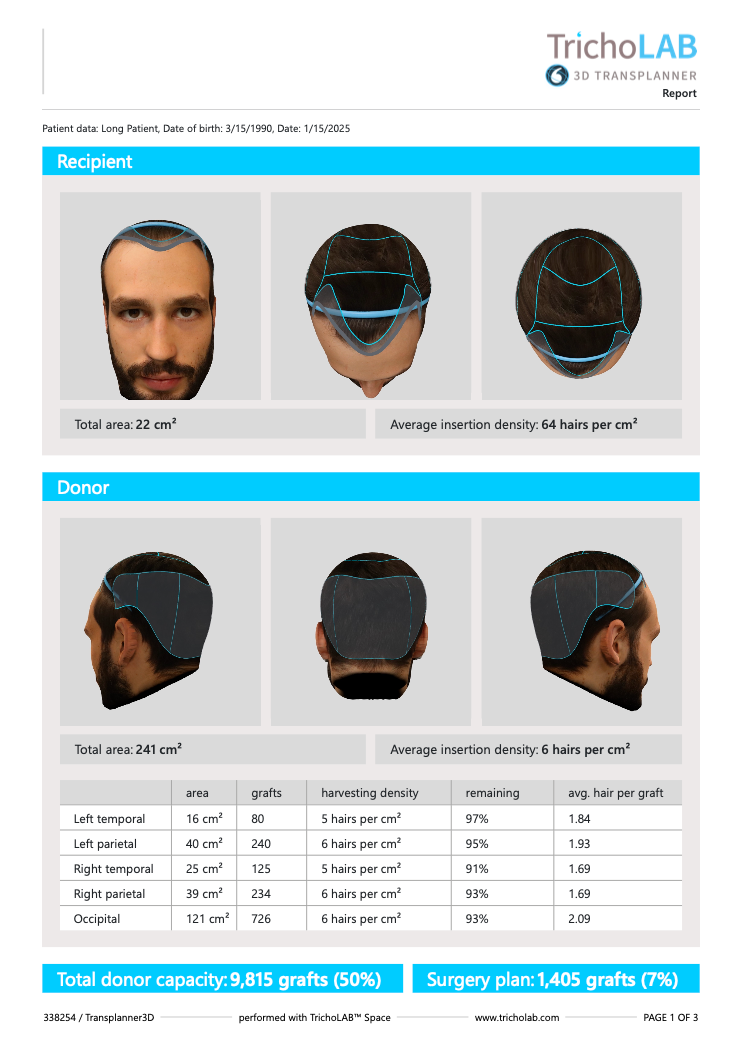
How Our Hair Restoration Software Feedback Loop Works in Practice
We use the phrase "feedback loop" deliberately - because a loop has to close. Receiving feedback is easy. Acting on it, and then communicating back what happened, is where most companies fall short.
Here is what our loop looks like:
A clinic raises a need or identifies friction - a specific feature request, a workflow that feels inefficient, or a question about whether something could work differently in practice.
We analyse whether it reflects a broader pattern - is this a challenge one clinic is experiencing, or something that emerges across many? Both matter, but the response may look different.
We determine the right response - sometimes that's a new feature, sometimes a modification to something existing. Occasionally it's an explanation of why the current approach is the better one - and why.
We always come back with an answer - the loop closes every time. Not a suggestion box, but a dialogue. And it's ongoing.
This process is not occasional. It runs in parallel with everything else we do - because clinical practice is always evolving, and the software needs to evolve with it.
What This Means for Your Clinic
Hair Restoration Software That Fits Your Workflow - Not the Other Way Around
When you use TrichoLAB, you are not adopting a finished product and learning to fit your practice around it. You are entering a relationship where your clinical experience has real influence over how the tool develops.
The workflow that feels natural in your consultation today was shaped by clinicians who had the same instinct. The report format that works well with patients exists because a doctor told us the previous version didn't. The small details that make a difference in a specialised diagnostics clinic — the ones invisible from the outside — are there because someone pointed them out, and we listened.
This has a practical consequence: TrichoLAB gets more useful over time. Not on a fixed release schedule, but because the clinical community using it continuously tells us where the friction is — and we continuously remove it.
The Difference Between a Product and a Partner
Most competitors in this space offer features. A feature list is easy to compare: imaging modes, measurement parameters, export formats. You can put it in a table and score it.
What is harder to put in a table is the difference between a product and a partner.
A product is built to a specification and delivered. A partner grows with you. It responds to what you encounter in practice, takes your clinical judgment seriously enough to let it shape the roadmap, and treats the gap between what exists and what you need not as an inconvenience - but as useful information.
That is the commitment behind TrichoLAB's hair restoration software. Not to have the longest feature list, but to have the most clinically honest one - built through genuine collaboration with the doctors and clinics who know what good looks like from the inside.
Want to see how AI-assisted 3D planning could work in your own clinic?
Message us on WhatsApp — we'll walk you through it.

Comments